Resources

Filter by category:

Filter by type:

A Therapeutic Minute: Sitting with Our Feelings

Instead of dismissing or suppressing our difficult emotions, there is much to be gained from choosing to sit with them for a while.

A Therapeutic Minute: Sharing the Load

Our brains use around 20% of our body’s energy budget. Social Baseline Theory Teaches us that they are built to be co-regulated through social interaction, helping us to share the load.

A Therapeutic Minute: Honouring our Emotional Needs

Beginning to prioritise our own emotional needs means getting comfortable setting some boundaries.

A Therapeutic Minute: Consensual Conversations

A Consensual Conversation ensures that both parties are ready and prepared to step into the interaction, increasing the likelihood of a positive outcome

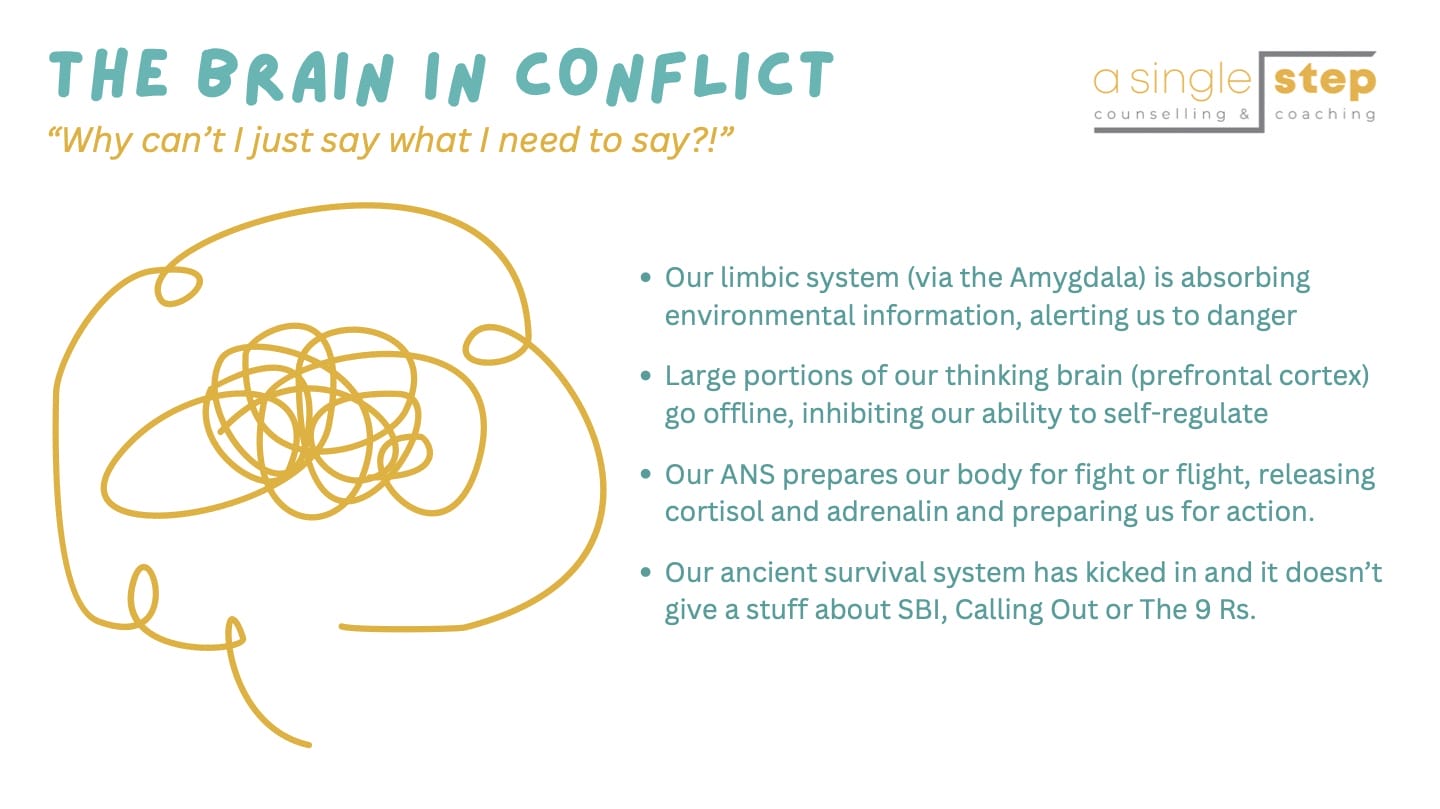
The Brain in Conflict

Our resources about SBI and Calling Out provide valuable supports for approaching courageous conversations. This infographic reminds us of the challenges faced by the brain in conflict and the importance of taking a moment and taking a breath before stepping in.

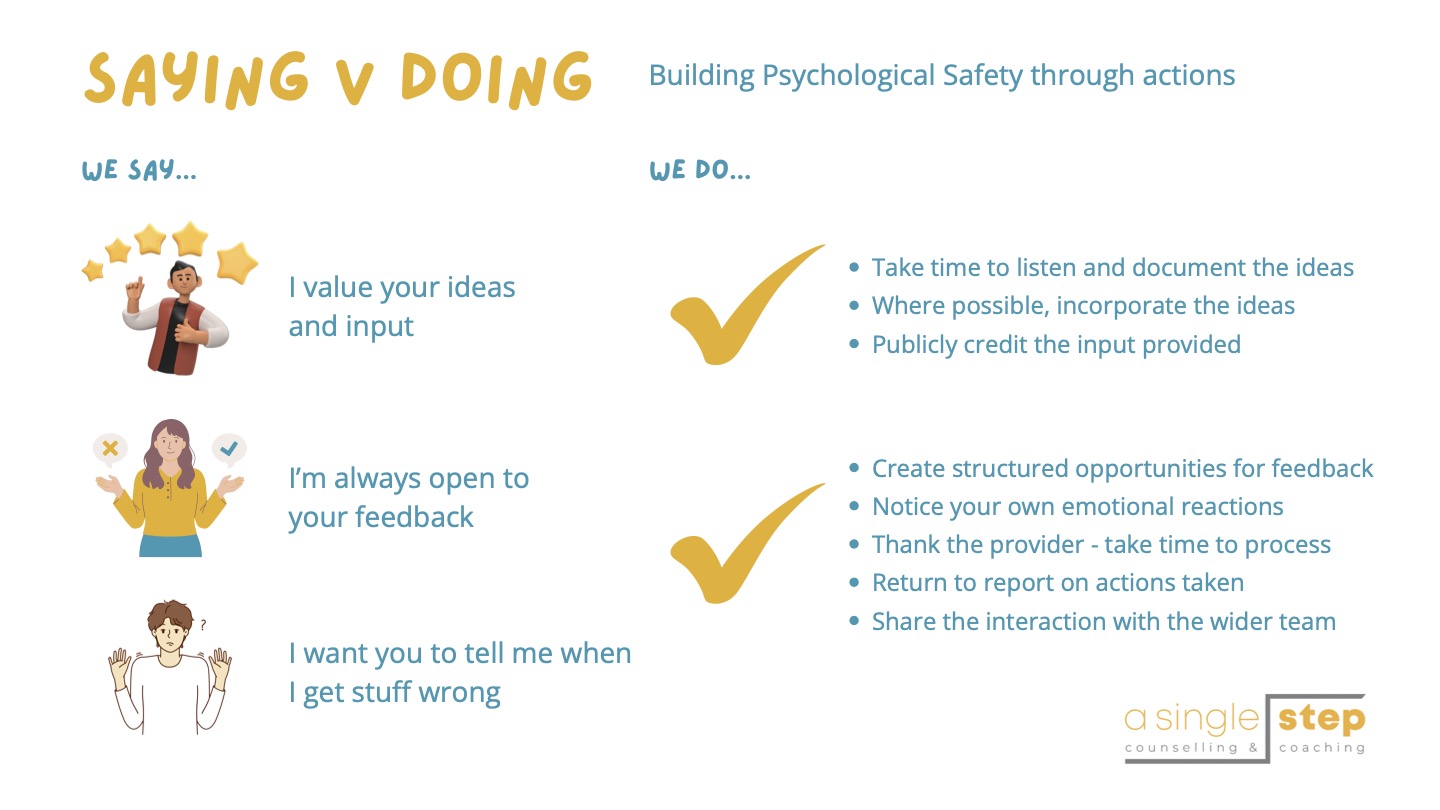
Saying v Doing

A consistent alignment between words and actions is one solid way that leaders can foster psychological safety across their teams. This infographic explains how.

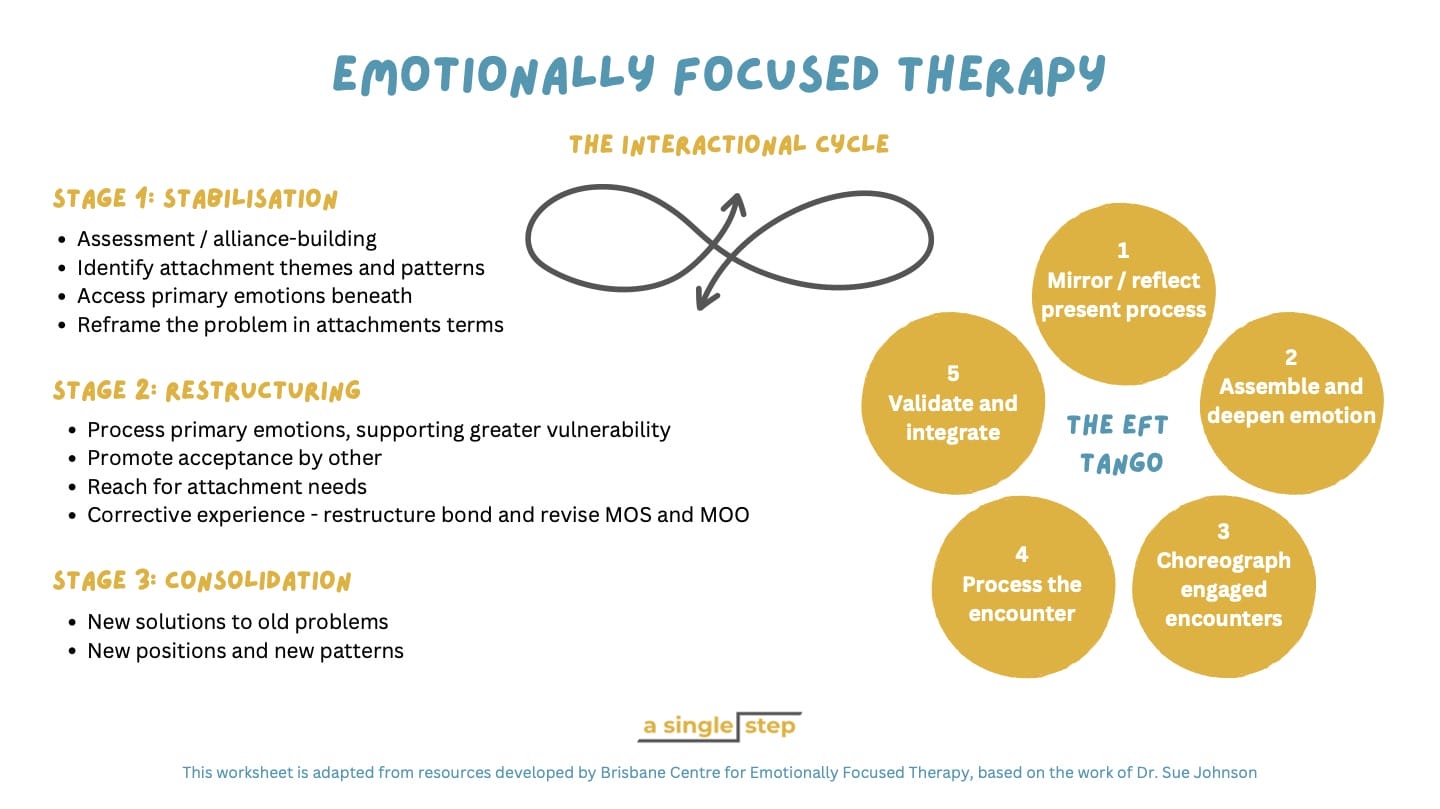
Key Elements of Emotionally Focused Therapy

Emotionally Focused Therapy is a modality which grew from Attachment science and has become one of the most empirically validated therapeutic models. This infographic provides a simple overview of some of its key elements. For more information about EFT, go to: https://bceft.com.au/

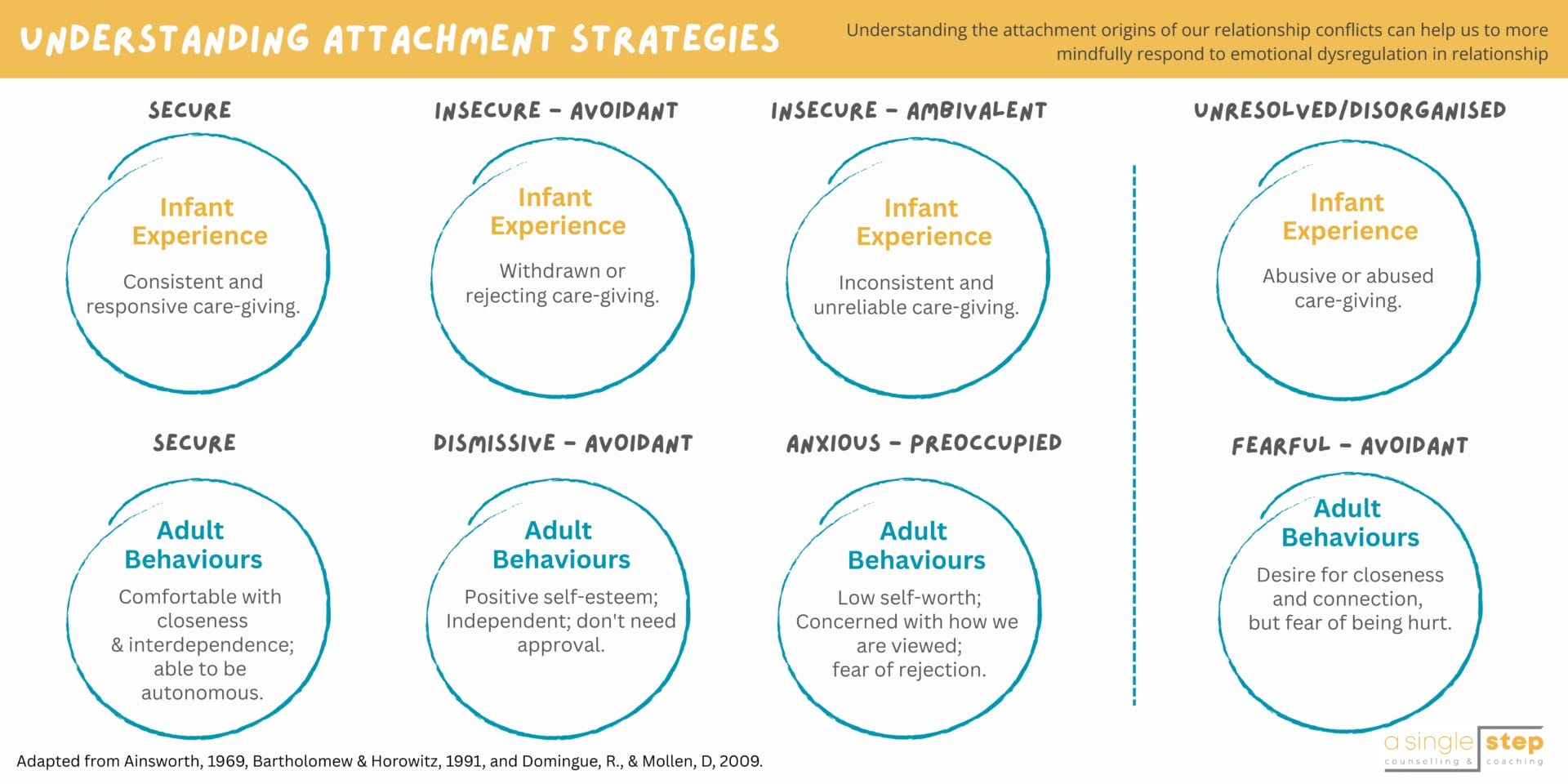
Attachment Styles

Since the groundbreaking work of John Bowlby and Mary Ainsworth in the 1960s, Attachment Theory has helped us understand the infant and childhood origins of much of our adult behaviours in close relationships. This infographic outlines the 4 central Attachment Styles, along with the infant or childhood experience that gave rise to them and their…

3 Conversations

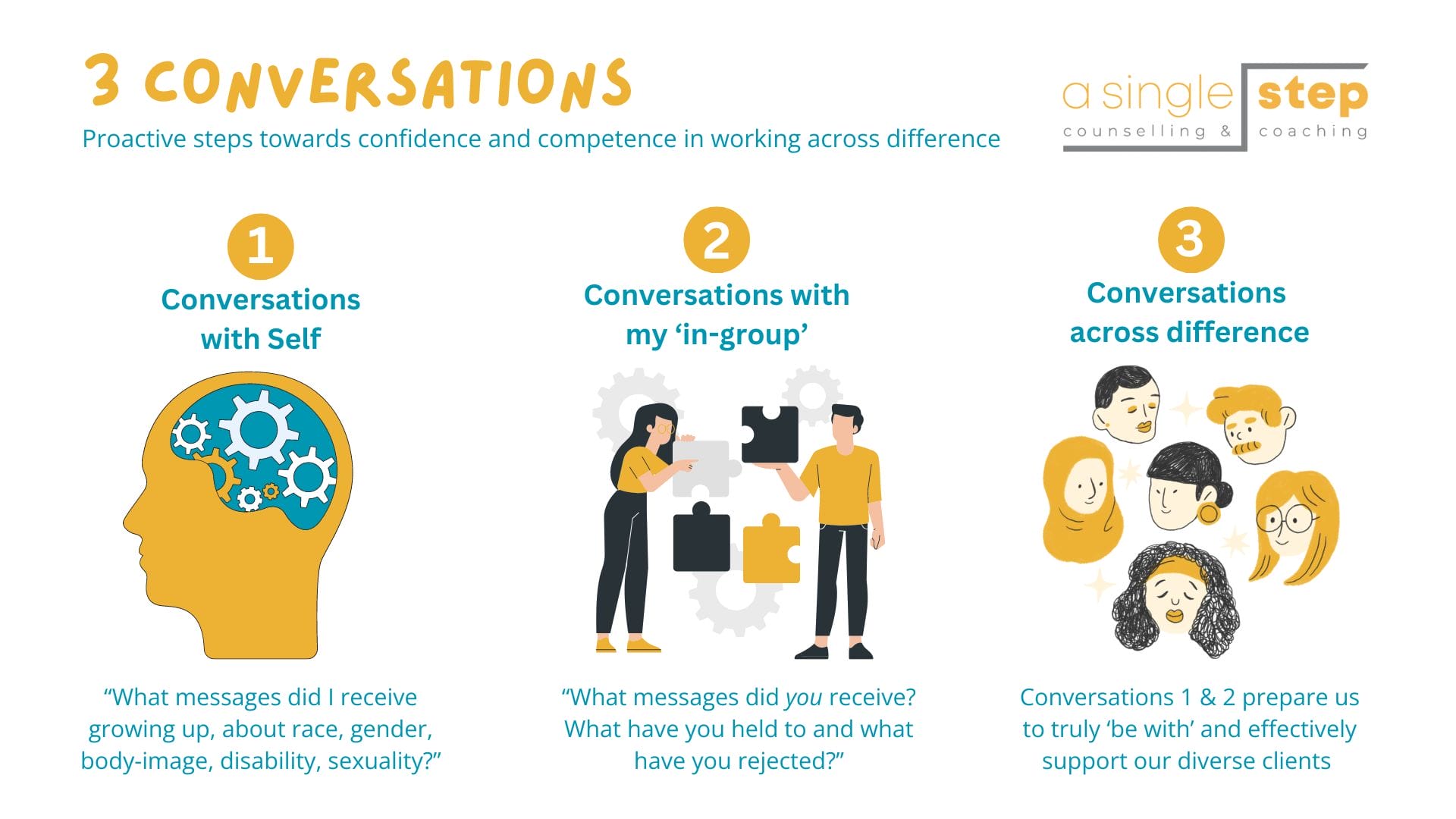
To work confidently and competently across difference, we must take the time to examine our own family of origin, community and cultural experiences, and the messages they conveyed to us. This enables us to understand our cultural biases and privileges, and supports greater cultural humility. This, in turn, bolsters our capacity to truly ‘be with’…

The Window of Tolerance

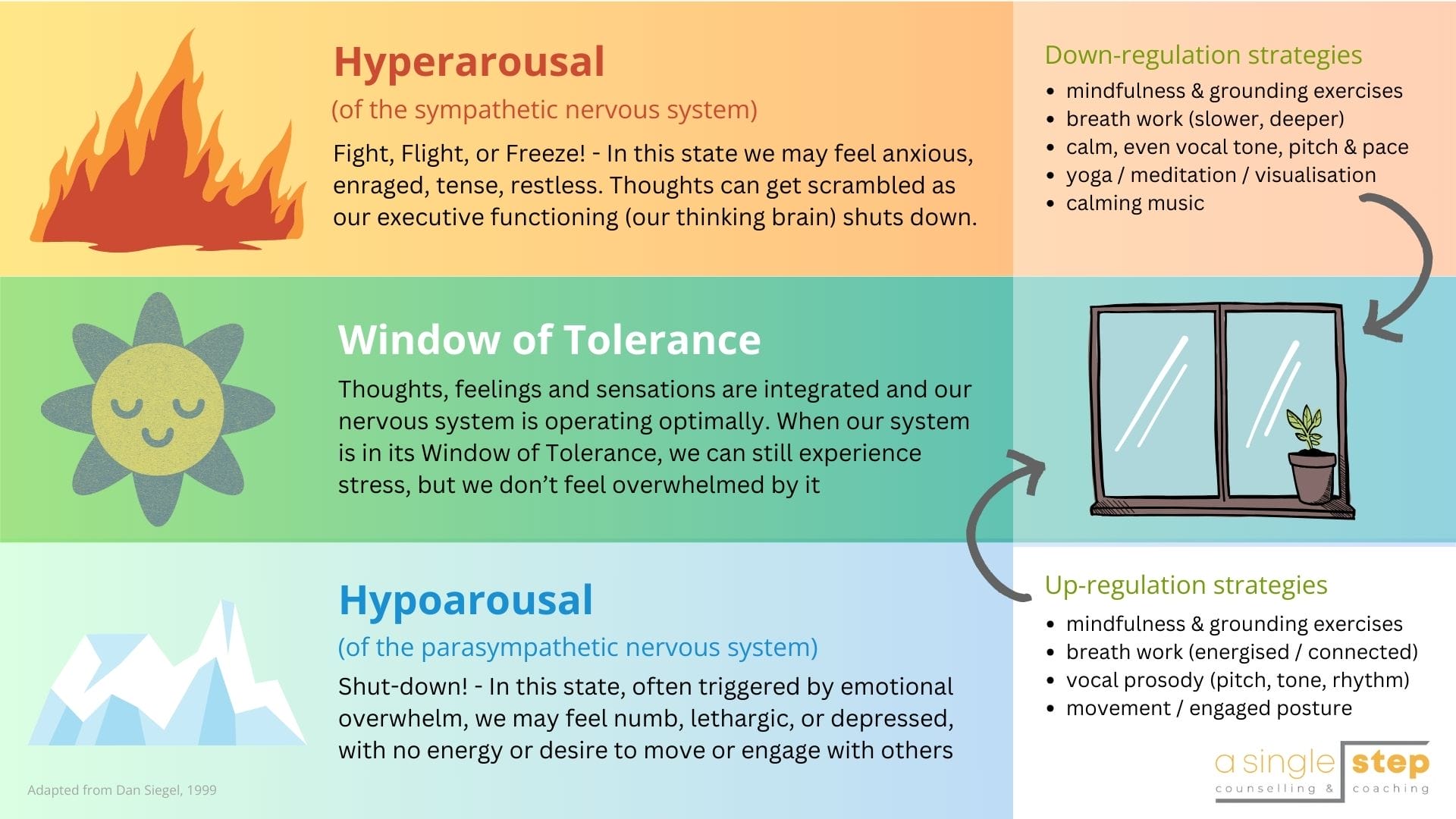
Adapted from the concept developed by Dan Siegel in 1999, this infographic supports the understanding that we can each take proactive and practical steps to maintain optimal levels of activation of our nervous system, towards more functional day to day living and more fulfilling relationships. 

Feelings in Motion Introduction

Join me for this short introduction to my series of 4 ‘Feelings in Motion’ videos, helping you to identify and manage difficult emotions.

Feelings in Motion Episode 1: Anger

Welcome to this first of four short videos from A Single Step, helping you to recognise and manage your difficult emotions. Today’s video focuses on anger. Check out our next video which will explore anxiety.

Feelings in Motion Episode 2: Anxiety

Welcome to this second of four short videos from A Single Step, helping you to recognise and manage your difficult emotions. Today’s video focuses on anxiety. Check out our next video which will explore depression.

Feelings in Motion Episode 3: Depression

Welcome to this third of four short videos from A Single Step, helping you to recognise and manage your difficult emotions. Today is all about depression and hopelessness. Check out our final video which will explore sadness.

Feelings in Motion Episode 4: Sadness

Welcome to the fourth and final short video in my ‘Feelings in Motion’ series, helping you to recognise and manage difficult feelings. In this video, the focus is Sadness and Grief.

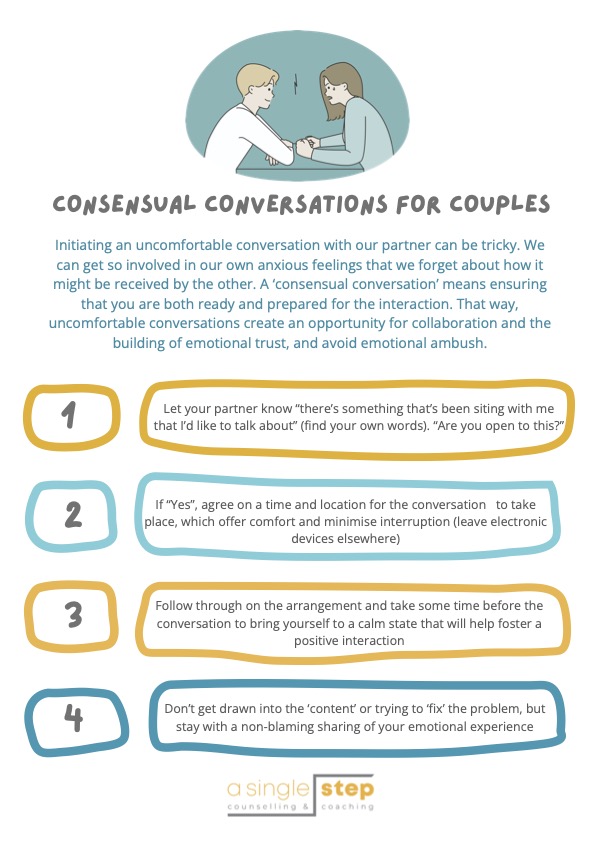
Consensual Conversations

Initiating an uncomfortable conversation with our partner can be tricky. We can get so involved in our own anxious feelings that we forget about how it might be received by the other. A ‘consensual conversation’ means ensuring that you are both ready and prepared for the interaction. That way, uncomfortable conversations create an opportunity for…

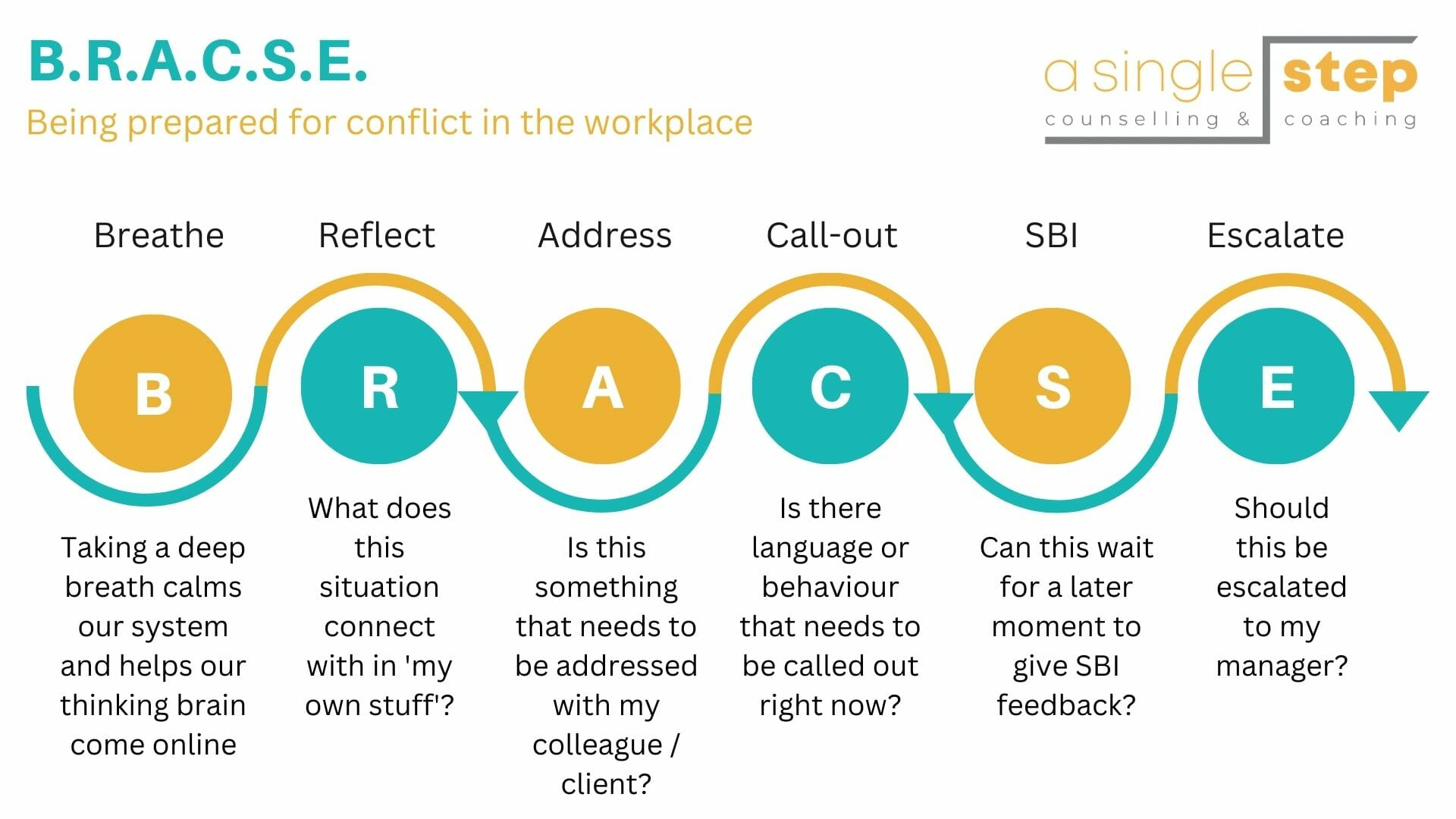
B.R.A.C.S.E.

A Single Step’s simple and elegant ‘BRACSE’ framework supports team members and staff members to safely navigate the difficult workplace conversations that need to be had. ‘Brace’ means to prepare for an impending challenge. When we take time to prepare, we are better equipped to manage conflict effectively. The ‘SBI’ and ‘Call-out’ concepts referred to…

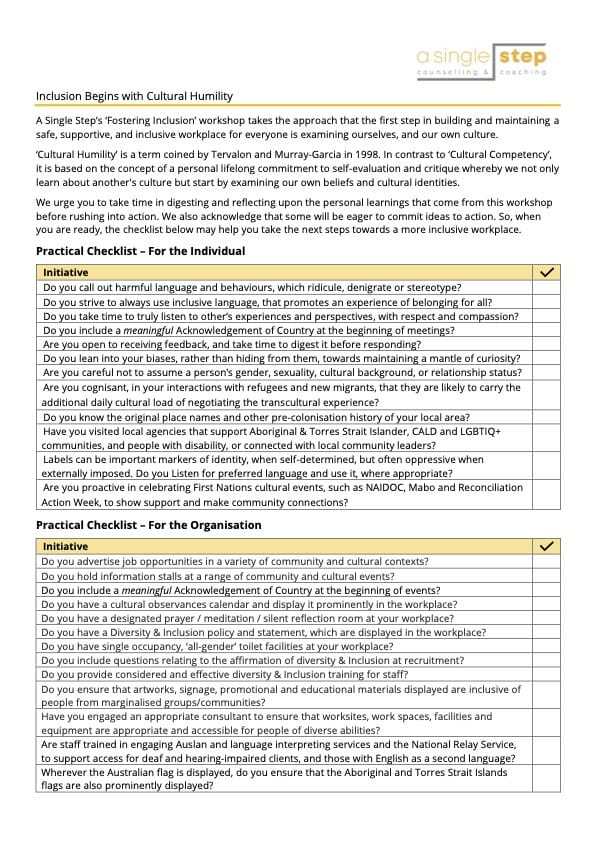
Fostering Inclusion in your Workplace – Practical Steps

This checklist is a companion to A Single Step’s ‘Fostering Inclusion’ workshop. We hope it will help you take the next practical steps towards building and maintaining a more inclusive workplace. 

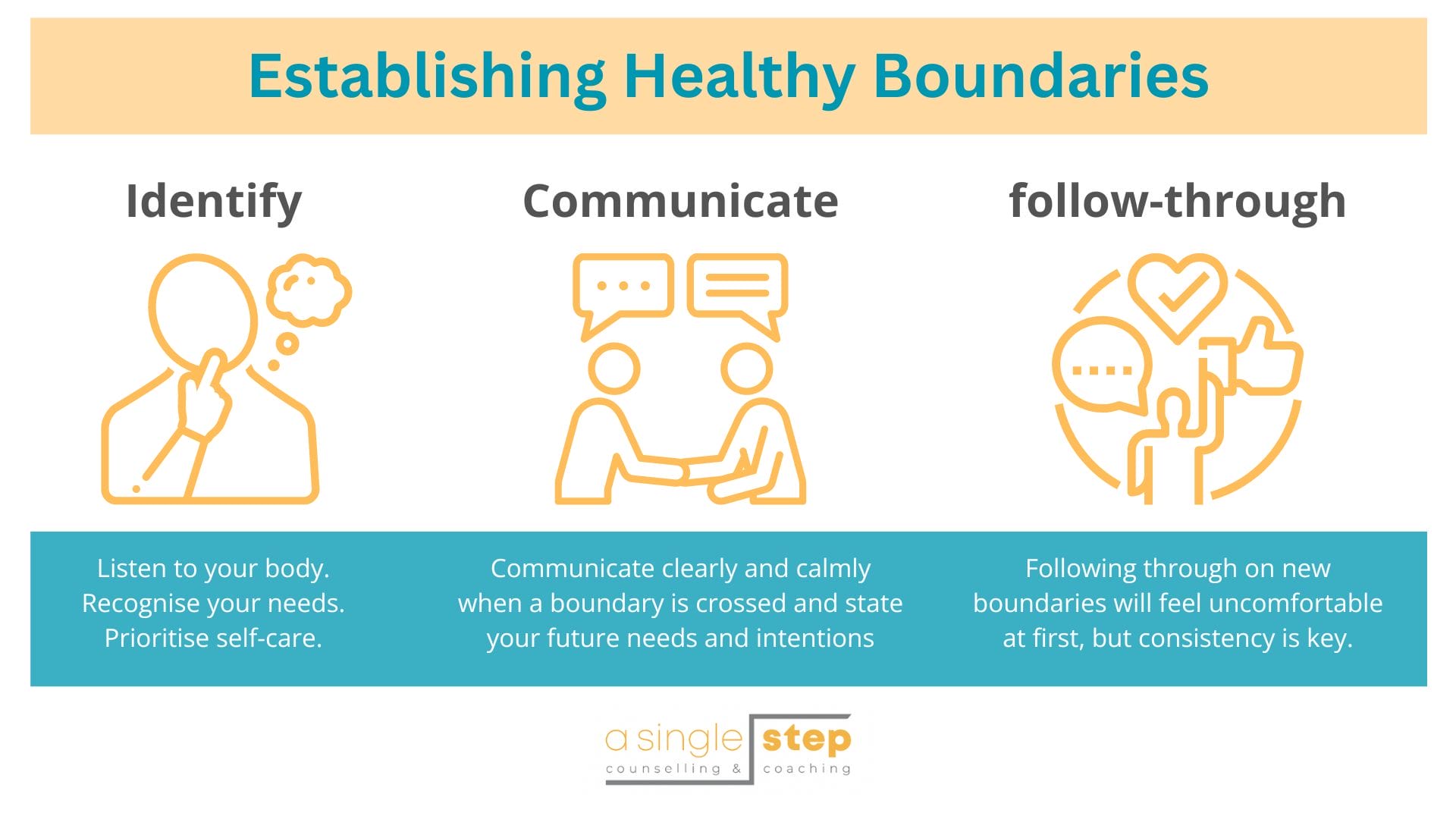
Establishing Healthy Boundaries

Establishing healthy boundaries in our relationships with each other and with our own emotional needs begins with recognising when we are emotionally out of balance. This infographic guides us to identify and communicate our core emotional needs as well as follow through with consistent actions.

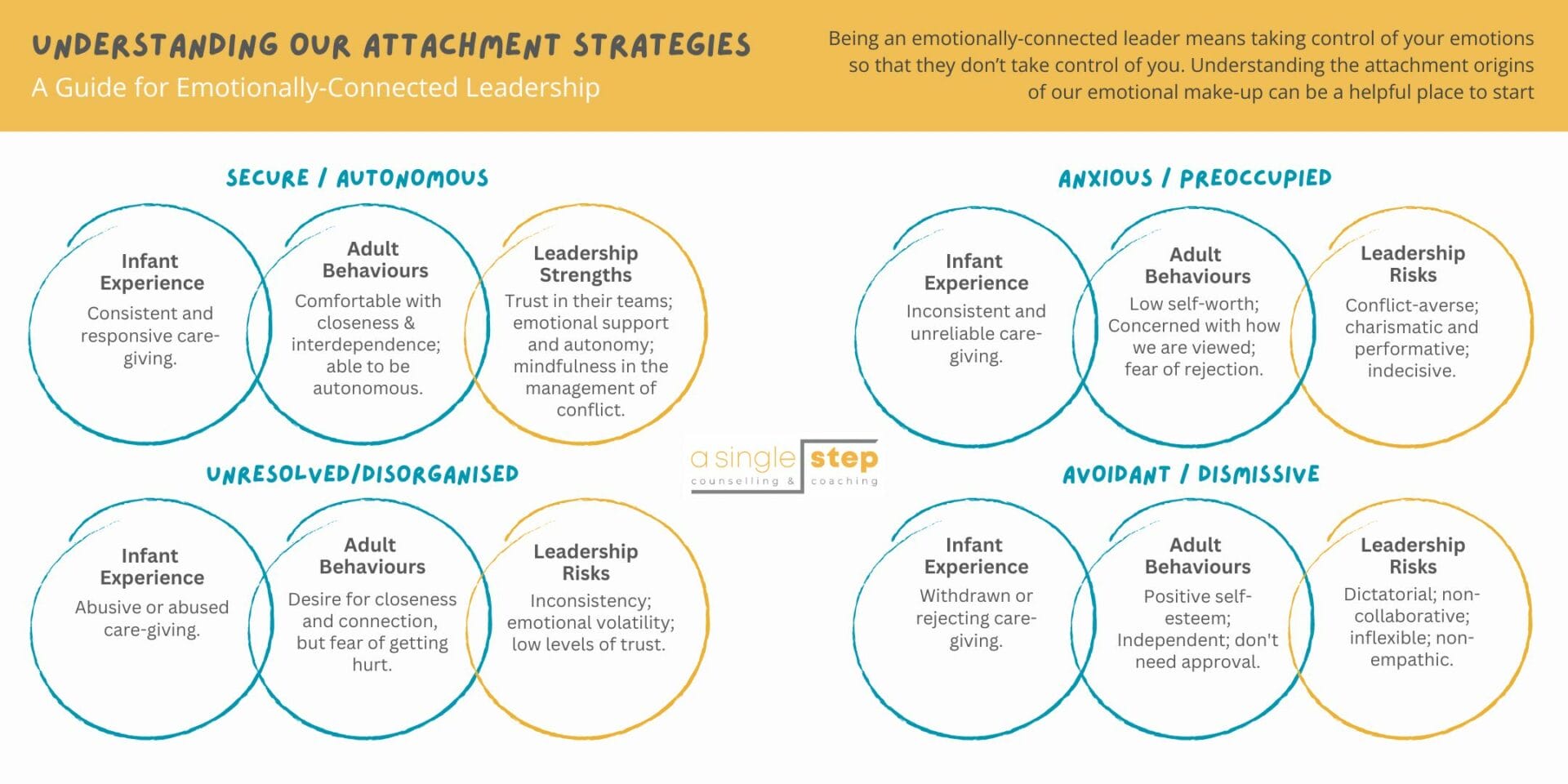
Attachment Styles for Leaders

Since the groundbreaking work of John Bowlby and Mary Ainsworth in the 1960s, Attachment Theory has helped us understand the infant and childhood origins of much of our adult behaviours in close relationships. This infographic outlines the 4 central Attachment Styles, along with the infant or childhood experience that gave rise to them and the…

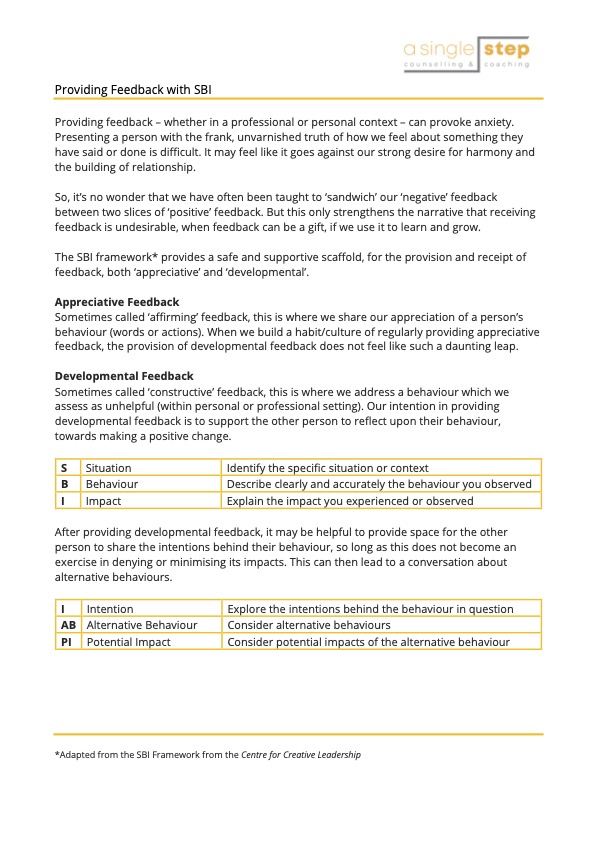
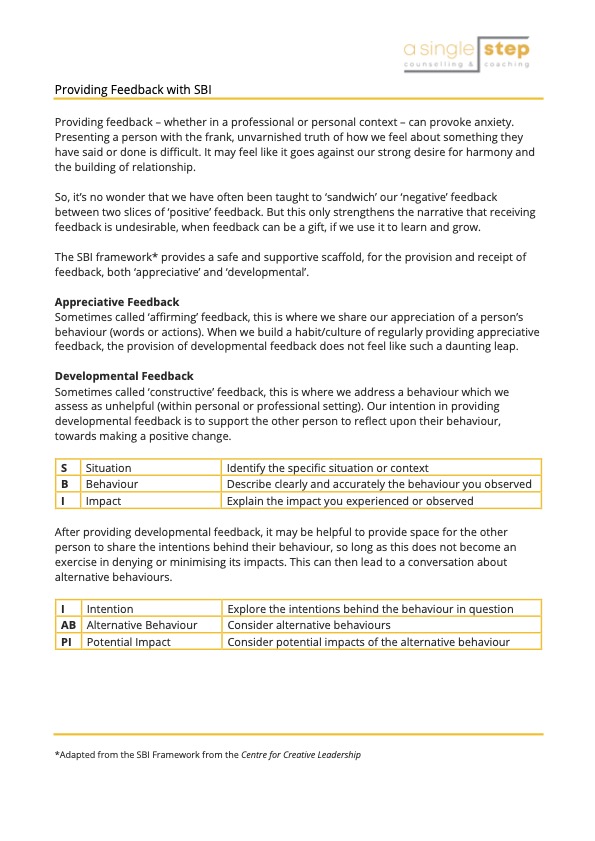
Providing Feedback with SBI

The well-establish framework of SBI (Situation, behaviour, Impact) offers a simple but powerful scaffold to support team members to give and receive feedback, both developmental and appreciative.

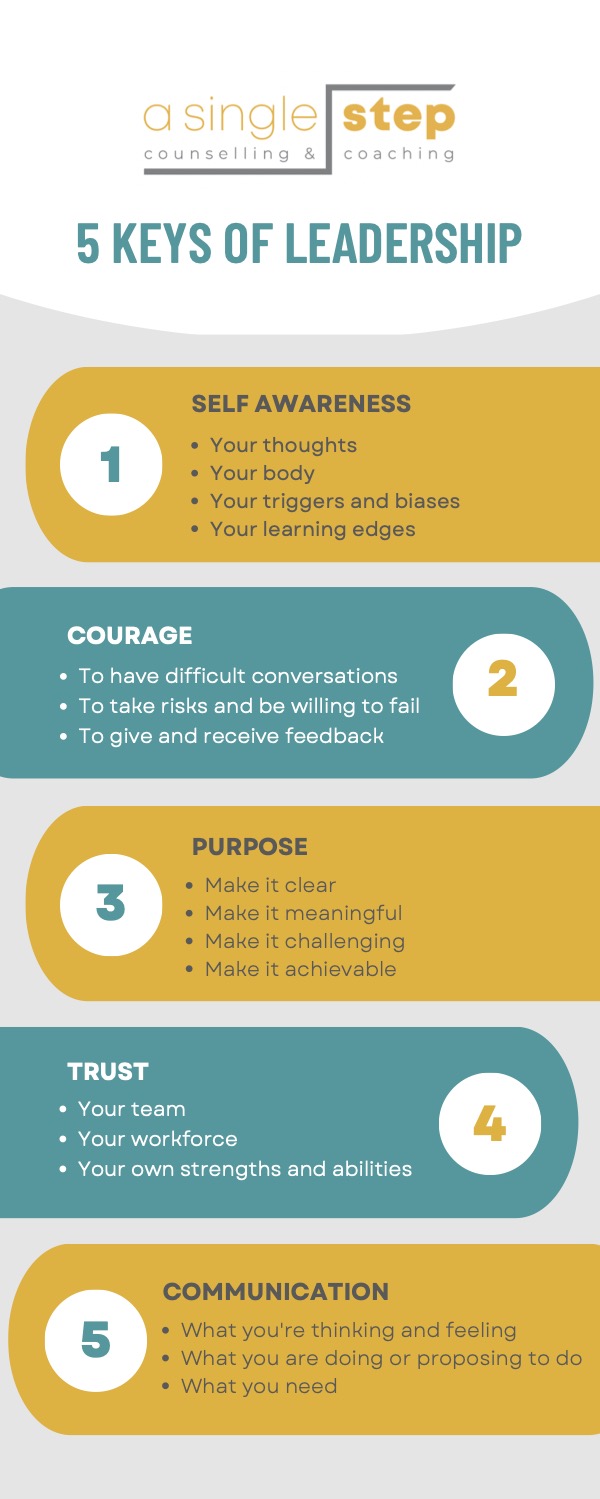
5 Keys of Leadership

Informed by a variety of sources, and many years of professional experience, Chris Pye shares his 5 Keys of Leadership in this infographic that guides teams to optimal performance

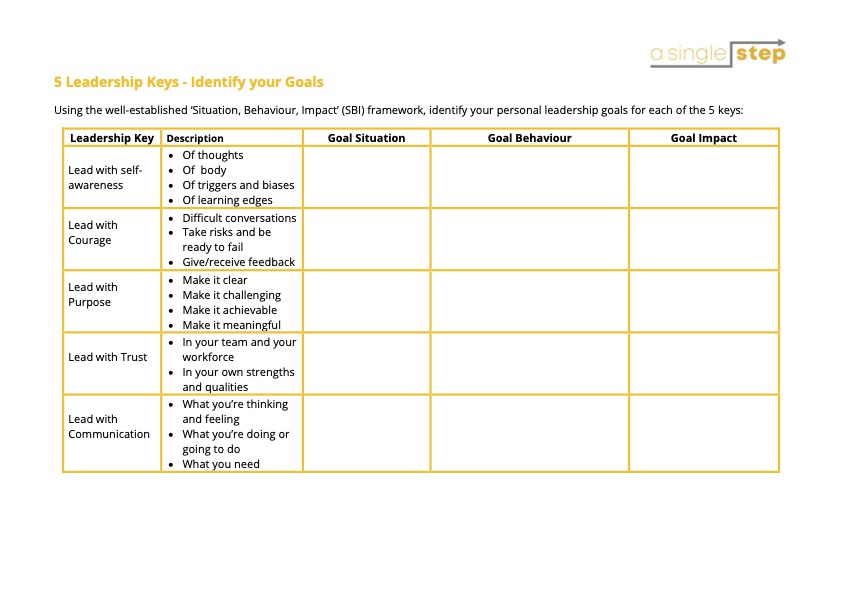
5 Keys of Leadership Worksheet

Building on his 5 Keys of Leadership framework, Chris Pye shares this invaluable tool for helping team members to identify the behaviours they will commit to, across the 5 key domains.

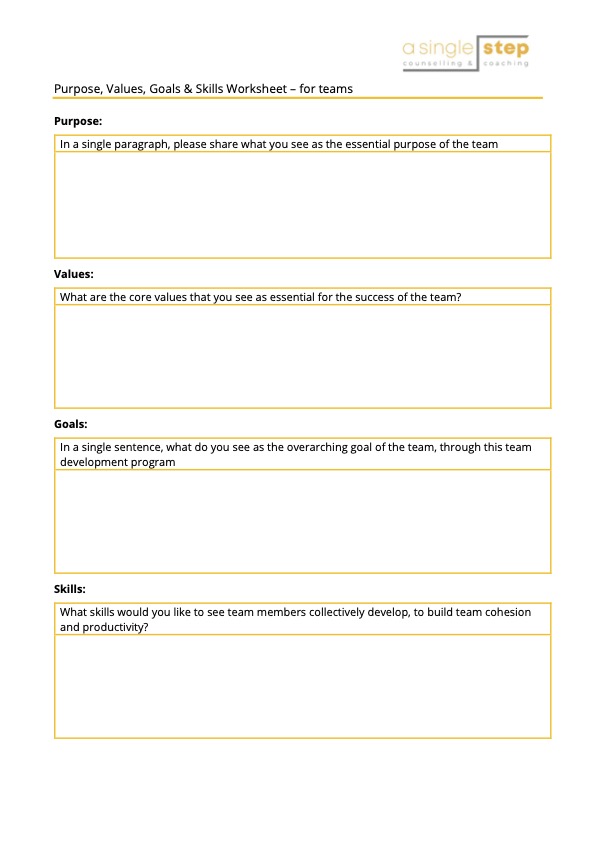
Purpose, Values, Goals & Skills Worksheet

This simple and effective worksheet is a central reference point for teams that want to meet on the same page, to take clear and intentional steps forward together

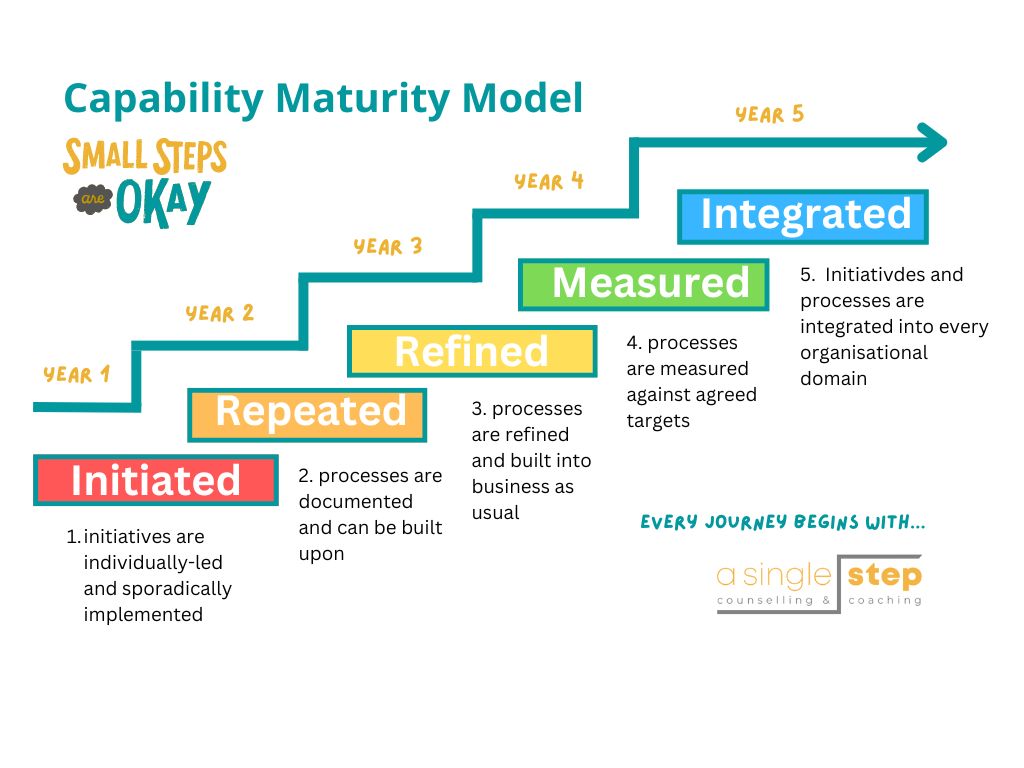
Capability Maturity Model

Using the established ‘Capability Maturity Model’ framework, this infographic offers a useful scaffold for the implementation of inclusion and trauma-informed practice strategies in the workplace.

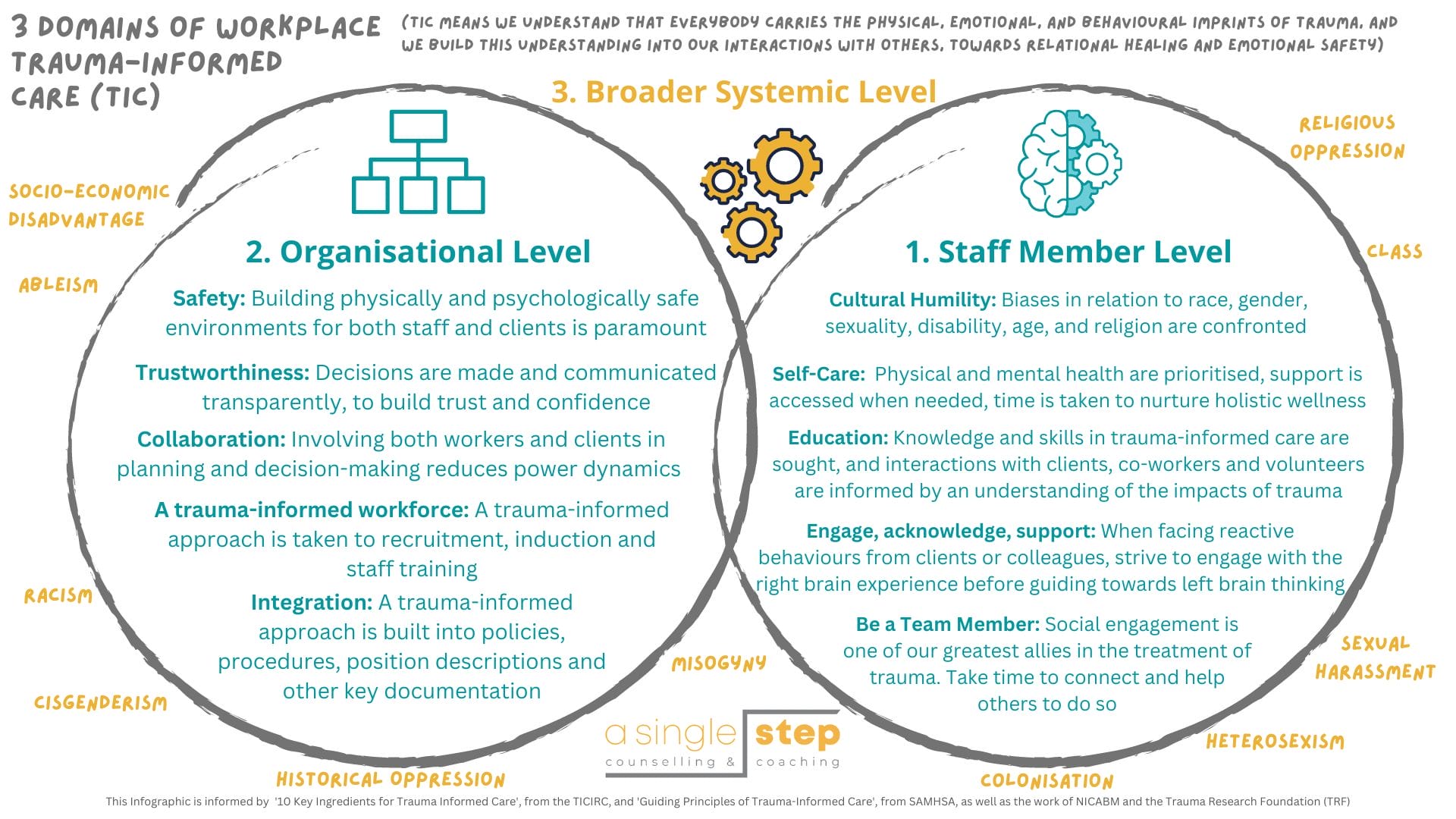
3 Domains of Trauma Informed Care

Drawing on the evidence-base of peak bodies, SAMHSA and TICIRC, as well as the principles of anti-oppressive practice, this infographic outlines three key domains of a trauma-informed approach in the workplace, to support strategic and ongoing implementation.

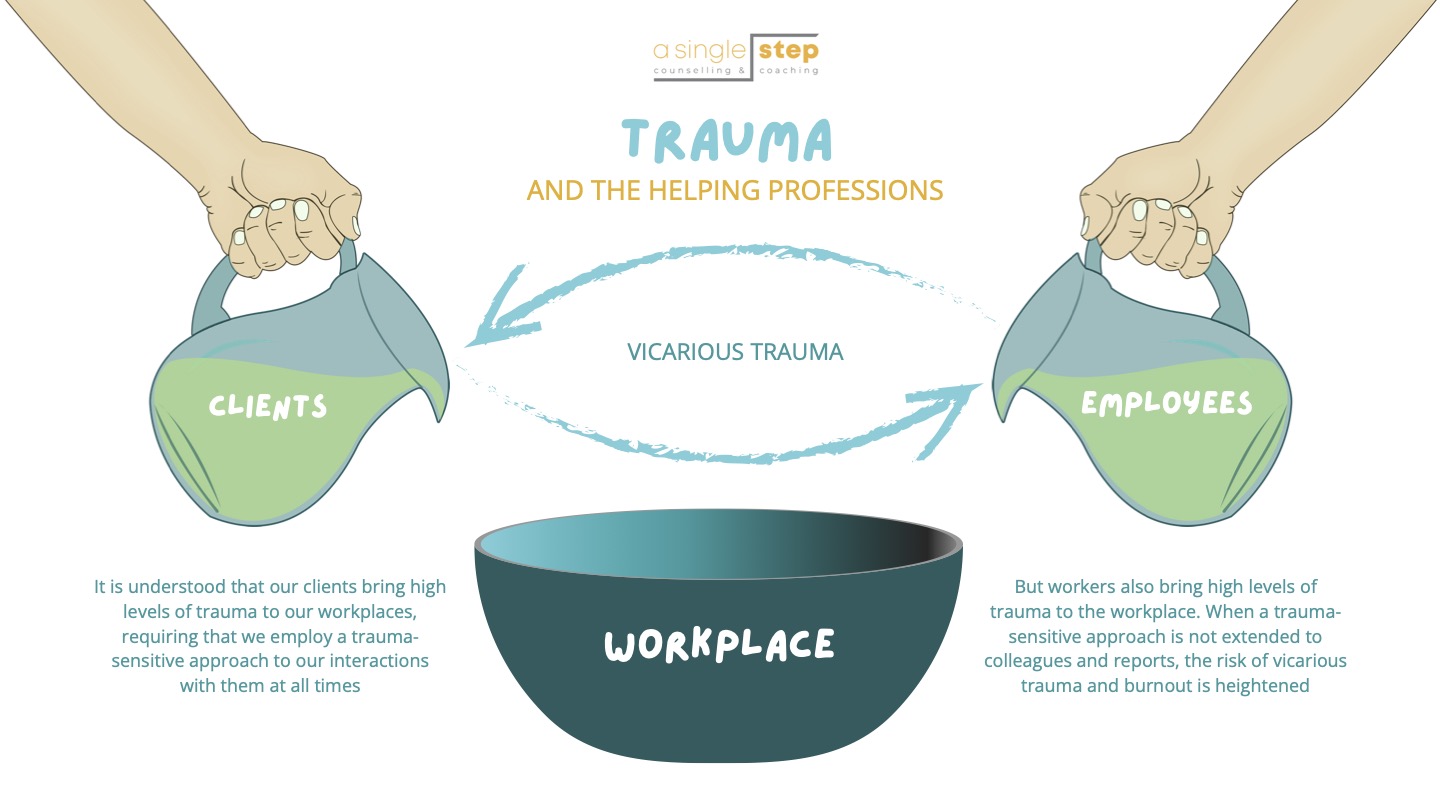
Workplace Vicarious Trauma

Building a trauma informed workplace starts with acknowledging the high levels of trauma and emotional distress brought to the helping professions by both clients and employees. By making the implicit explicit, we can begin to develop the appropriate structures of support.

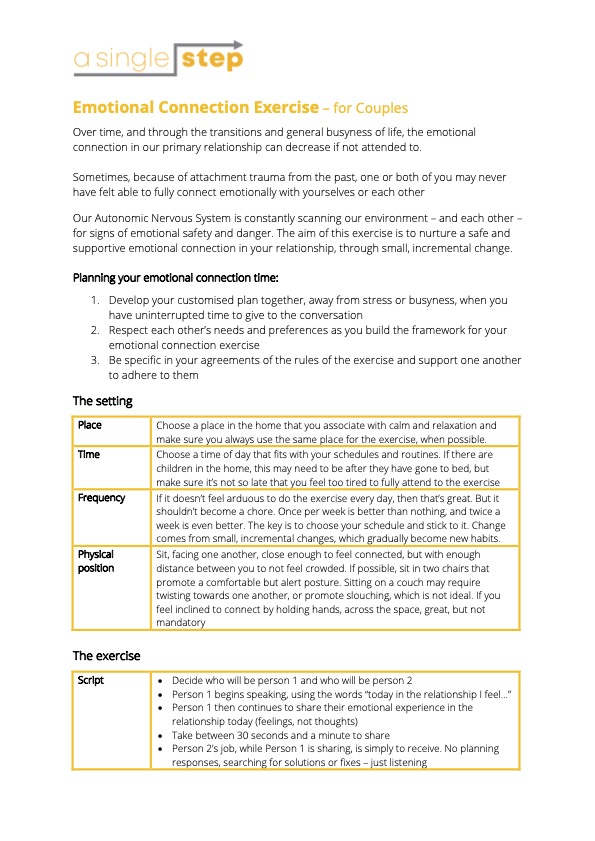
Emotional Connection Exercise for Couples

Over time, and through the transitions and general busyness of life, the emotional connection in our primary relationship can decrease if not attended to. Sometimes, because of attachment trauma from the past, one or both of you may never have felt able to fully connect emotionally with yourselves or each other. This exercise will help you, through small, incremental…

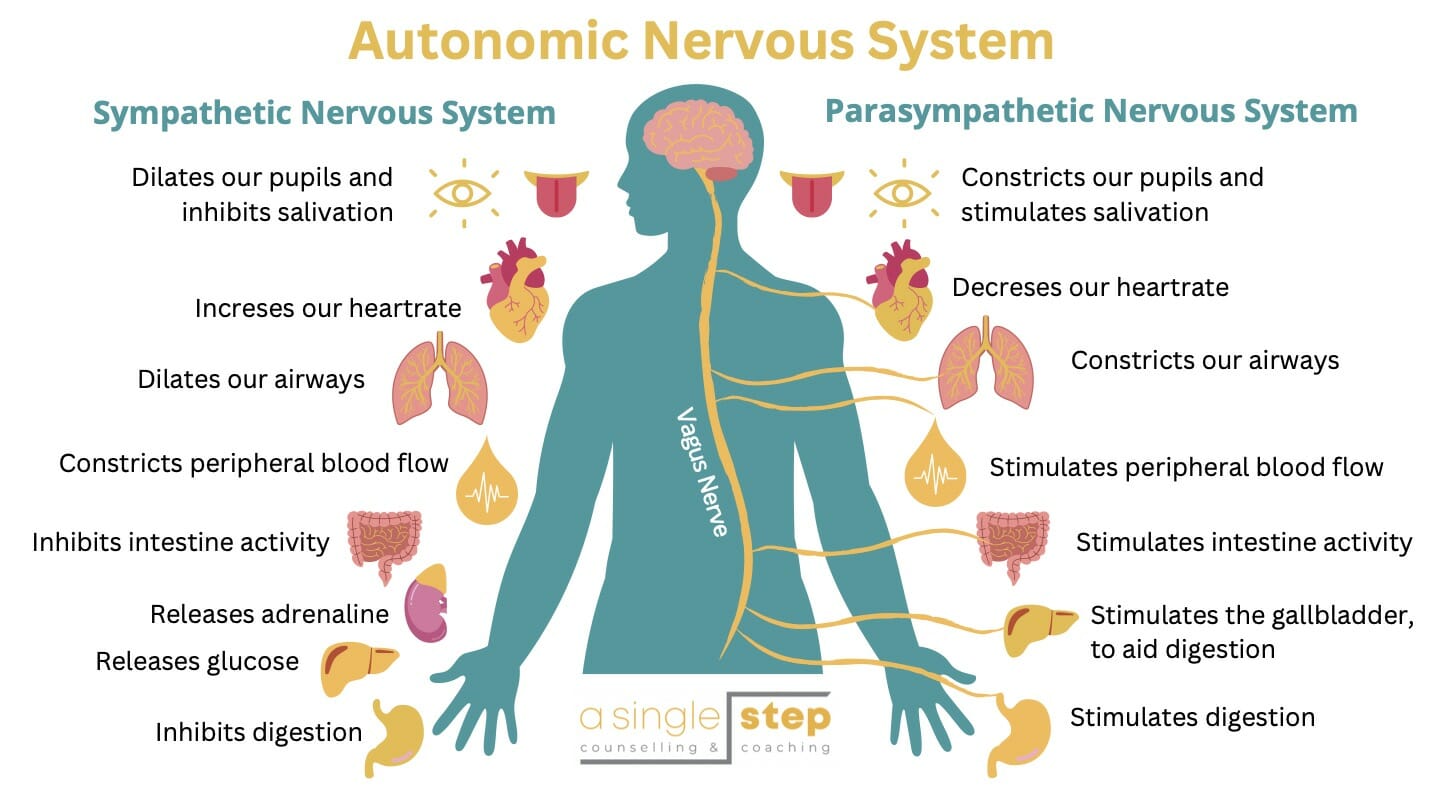
The Autonomic Nervous System

Our body’s Autonomic Nervous System (ANS) works behind the scenes, scanning our environment for both danger and safety. Orchestrated by the brain and triggered by our sensory perceptions, it readies our body for fight, flight or freeze, but also for safety and comfort. This infographic provides a broad overview of some of its key functions.  

Providing Feedback with SBI

Providing feedback to a colleague, a manager or a report can be stressful for both parties. The well-established SBI (situation, behaviour, impact) model provides the scaffolding needed to reduce anxiety and facilitate a constructive conversation, towards positive change.

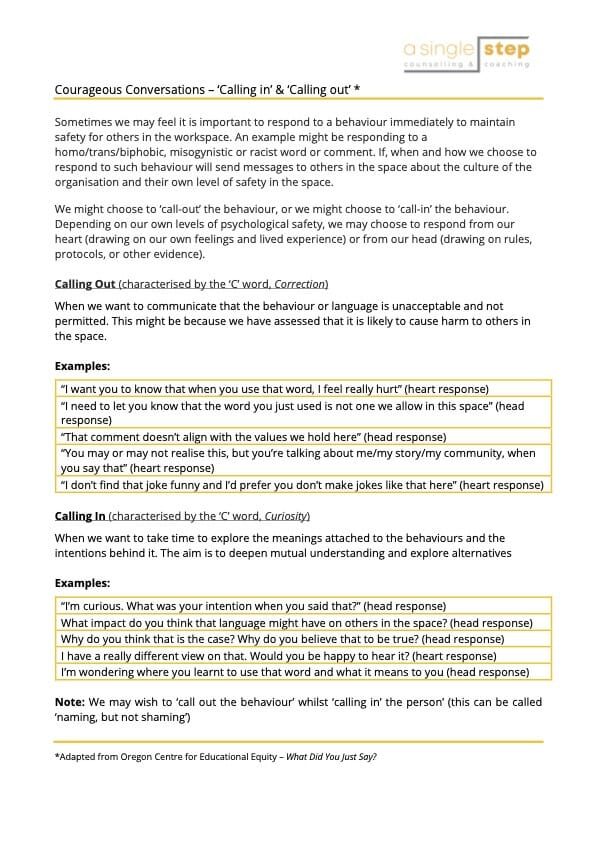
Courageous Conversations

Many of those working in teams avoid conflict, for fear of making a situation worse. But building a culture of ‘Courageous Conversations’ is essential for any team wanting to create an inclusive and psychologically safe working environment. This worksheet provides valuable guidelines for supporting the initiation of a conversation that you may need to have with…

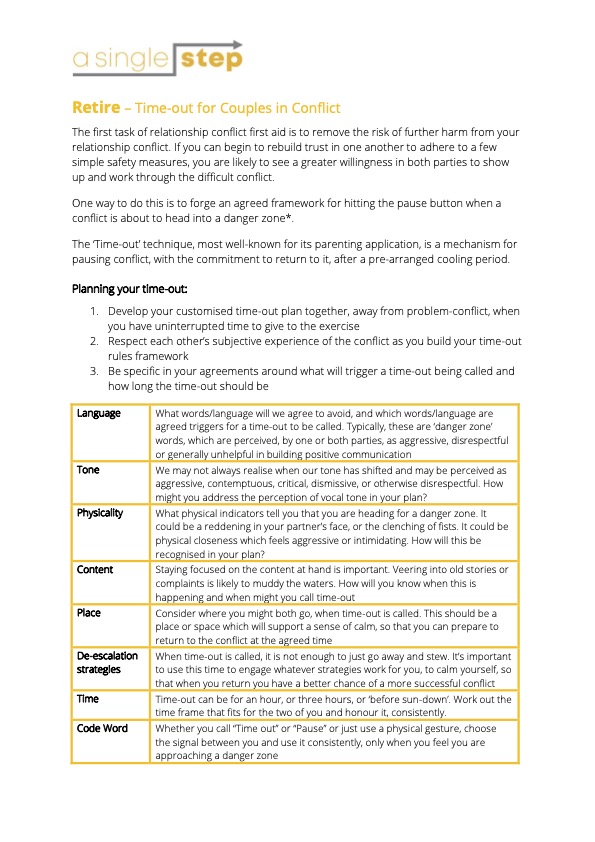
Time Out for Couples in Conflict

Most of us are familiar with the use of ‘Time-Out’ for children, but this amended version can also be an invaluable circuit-breaker for regulating high emotions in our adult relationship conflict. Download this resource to develop your own personalised Time-Out Plan.

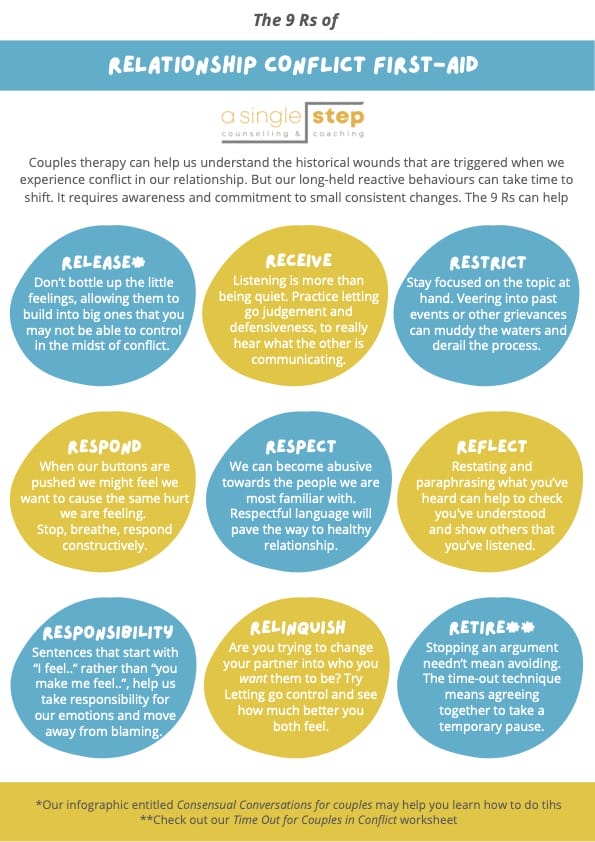
The 9 Rs of Relationship Conflict First Aid

Developed by A Single Step’s Chris Pye, over many years of clinical practice, the 9 Rs is an invaluable checklist of key microskills, vital in the management of relationship conflict. Which of the 9 Rs are most impacting your relationships? Download this resource and keep it somewhere visible, for easy reference.

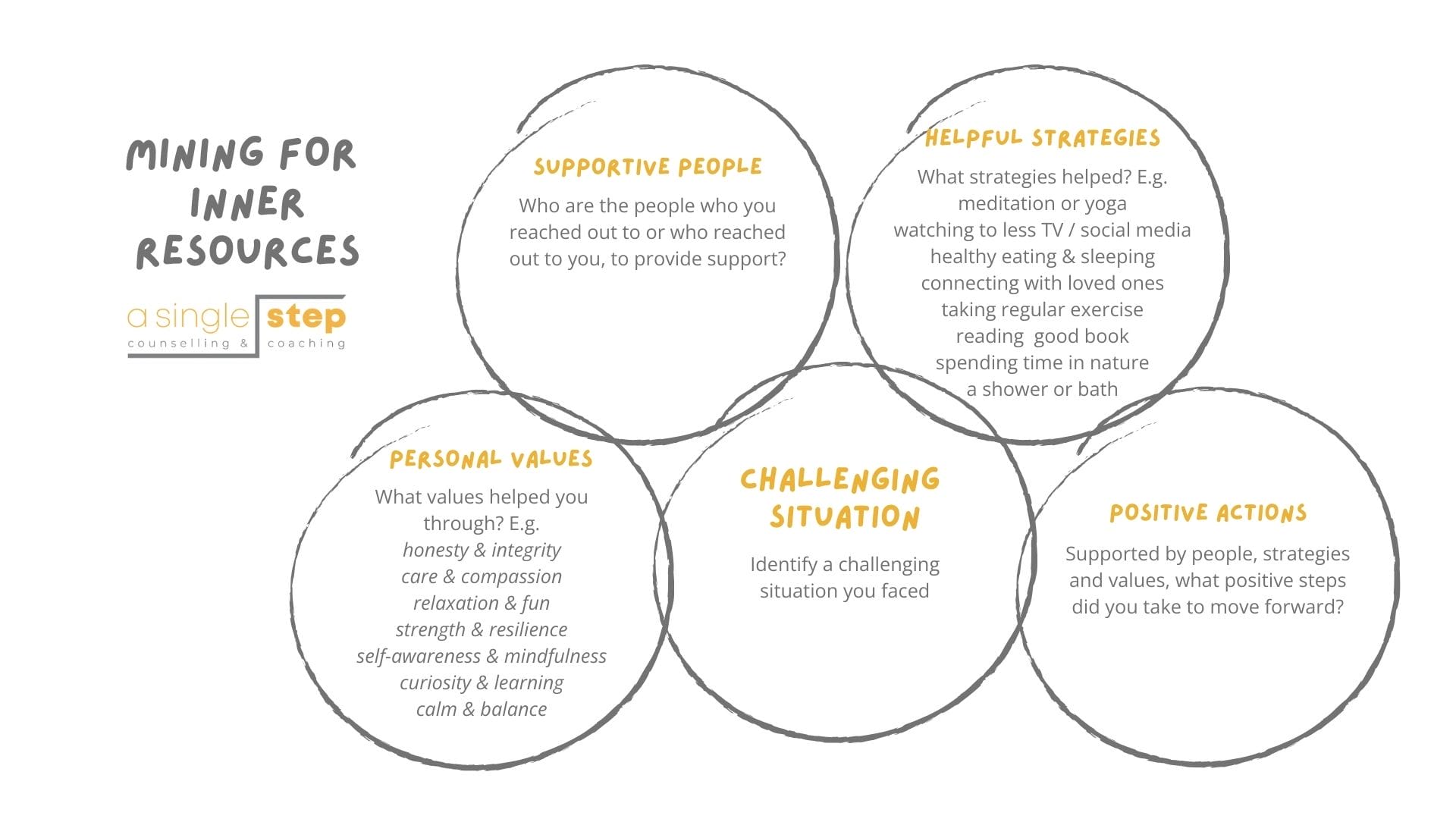
Mining for Personal Resources

When we encounter stressful or distressing experiences or periods in our lives, we can easily be knocked off balance. We can forget that we actually possess a range of skills and inner resources that we have collected through our lives. When we take time to reconnect with these, we also reconnect with our sense of…

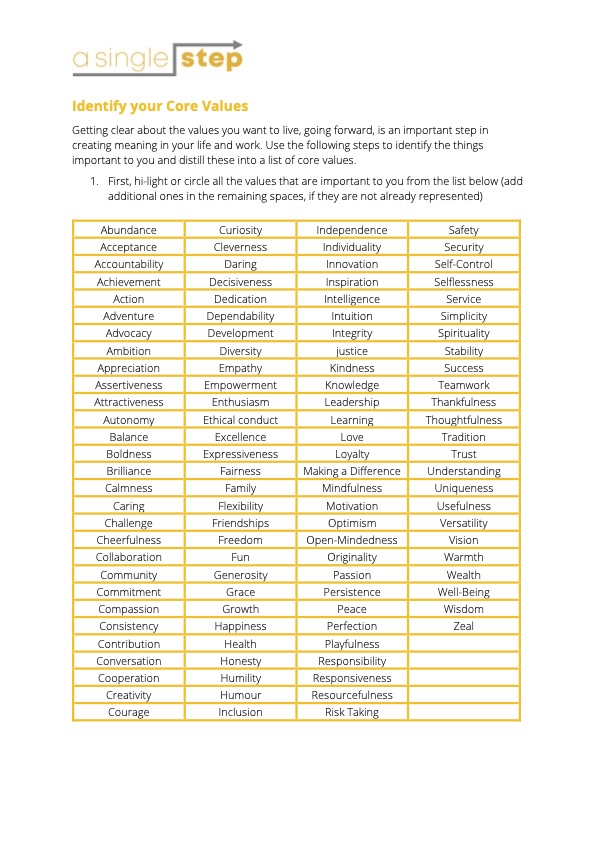
Identify your Core Values

Our values and world view are inherited from the families, communities and cultures in which we were raised. In adulthood, pausing to consider what has changed and what values we want to intentionally carry forward can be a useful process in our personal development. This worksheet will show you how you can do that. 

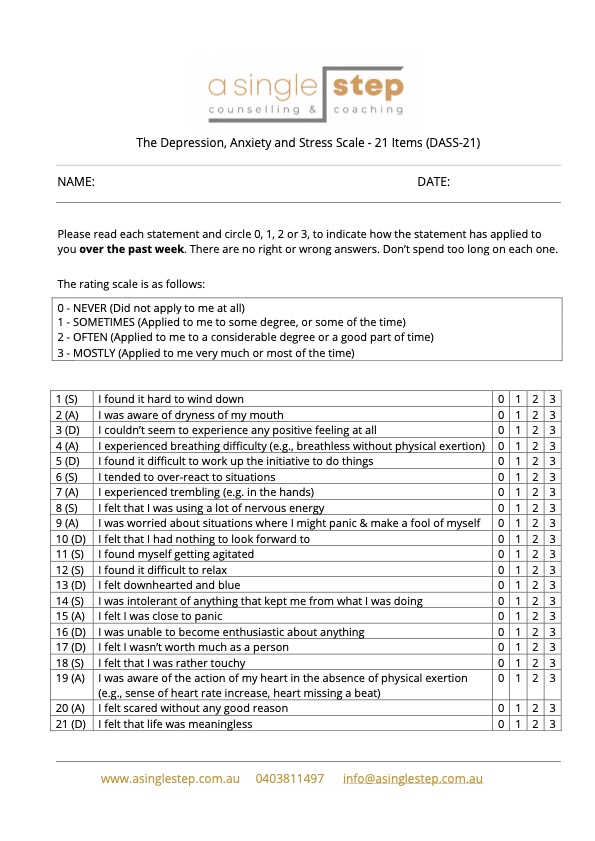
A Single Step DASS 21

The Depression, Anxiety and Stress Scale 21 (DASS-21) is a set of three self-report scales designed to measure the emotional states of depression, anxiety and stress. It can be a useful tool for checking how we are travelling and at A Single Step we use this resource to measure the positive impacts of our individual counselling services. 

Leadership-coaching-group

Courageous Conversations: How to Use Them to Foster a Team Culture of Cohesion and High Performance

Initiating difficult conversations with colleagues or direct reports may feel daunting. By utilising the following simple but powerful tools, you can build a team culture in which open, honest feedback becomes business as usual, towards greater performance and productivity.

3 Steps to Building your Self-Esteem Now

Self-esteem is one of those illusive terms, hard to pin down. How do we know if we’ve got it, how did we lose it and how do we get it back? Join me as I unpack the essentials and offer my top tips for transforming the way you feel about yourself.
Relationship Conflict

What is Relationship Conflict (5 ways to recognise when it is a problem in your relationship)

Conflict is a natural part of every relationship, so how do you know when relationship conflict has become a problem and what can you do about it?
Relationship Conflict Coaching For Couples 9 Signs of Relationship Dysfunction

3 Essential Conflict Management Skills, To Grow Your Relationship

All your efforts to reduce conflict and build a happier, healthier relationship will amount to very little if you don’t attend to the development of 3 essential conflict management skills. They’re free, instantly accessible, and they have the power to turn your relationship around.
How-do-I-convince-my-partner?

“But How do I Convince my Partner?”

Sharing the intimate details of our relationship with a complete stranger is more uncomfortable for some than others. But isn’t it worth enduring a little discomfort to get your relationship back on track? If you’re reading this, you might be saying “Yes!.. But how do I convince my partner?” This article will show you how.
Couples Coaching Relationship Dysfunction

The 9 Rs Of Relationship Conflict First Aid

Once we have taken the first step of deciding to stop avoiding conflict in our relationships, practice can transform that conflict into a deeper connection. My 9 Rs of Relationship Conflict First Aid will show you how.

Create Your Preferred Future

Taking responsibility for changing the things you do have control over in your life takes effort. Learn to transform this concept from a vague aspiration into the repetition of small actions, to truly create your preferred future.
Living With Integrity - Strong Female Leaders - A Single Step

Living With Integrity

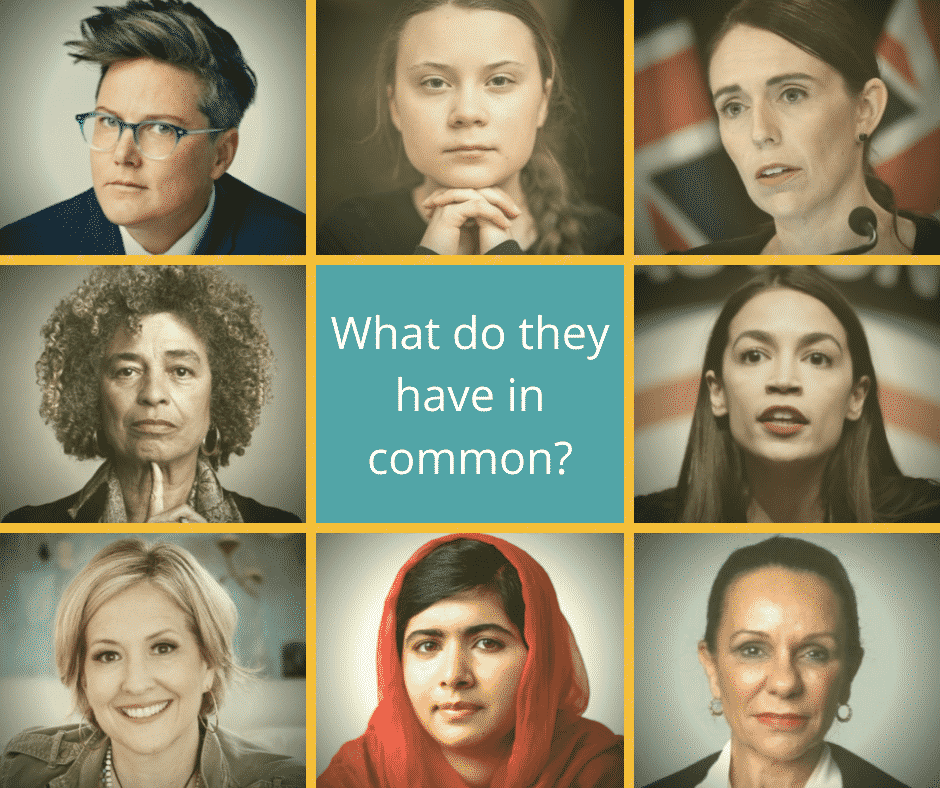
There’s a reason why anyone planning to market a new venture at the moment would be guaranteed success by simply naming their business Jacinta Ardern’s. Who would have thought that integrity and leadership would be such a winning combo? But what is this ‘living with integrity’ and how can we get some of it?

We Are What We Do

We can spend a lifetime waiting for the ideal moment, the right feeling, before we act. We might wait for irrefutable evidence or that elusive motivation. We might even wait for permission. Or we might choose to become infants once again, feeling fully alive as we step into the unknown, and discover its infinite possibilities.


Do Something Great

Resolutions can fall on fallow ground if approached with buckets of motivation, but little strategic thinking. Before we begin to chart a course to the realisation of a goal, we can save ourselves frustration and disappointment by making sure that it is the right goal to begin with. Then we can feel confident that we really will do something great.

Challenging Dominant Narratives

Dominant social narratives are everywhere. They inform our thinking and repress our authenticity. What narratives are you buying into without even realising it?

Acknowledging Social Privilege

Recognising our social privilege is an essential step in creating social change. We must start with ourselves if we hope to be of service to others. How has privilege impacted your life?

Letting Go of Expectation

Today I am living a more authentic life than ever. It all began when I began allowing myself to let go of the limiting expectations I had placed upon myself for so long. What stands in your way?